Your shed does a lot. It stores the mower. The bikes. The tools. But here’s the truth: without a good foundation, your shed will deteriorate faster and be harder to use.
Get it right and your shed will last for years to come. Doors swing true. Floors stay dry. No sinking. No wobble.
Get it wrong? You’ll battle water, rot, and stuck doors.
Not fun.
If you’re looking for expert guidance, the Shed Repair LLC team wants to help you make the best decision for your shed. Keep reading to learn more about common foundation options.
Table of Contents


In a nutshell; TL;DR
A solid shed foundation is key to durability, stability, and easy access. Common options include treated lumber borders and crushed stone pads, while alternatives such as concrete blocks, piers, or slabs may be suitable in certain situations. Adding a shed ramp makes moving equipment in and out much easier. Proper installation ensures your shed stays level, dry, and secure for years.
What a Good Shed Foundation Must Do (5 Jobs)
When thinking through your foundation options, it’s important to have a clear idea of what a good shed foundation actually does. Let’s look at the five main jobs your shed foundation should perform.
- Stay level. So doors open and close smoothly.
- Drain water away. Moisture is the enemy of wood floors.
- Spread the load. No settling, no ruts.
- Resist frost heave. Especially in PA’s freeze–thaw cycles.
- Make access easy. You shouldn’t wrestle your mower up a lip.

These five essential qualities form the foundation of any well-built shed. Whether you’re storing light gardening tools or heavy equipment like lawnmowers and ATVs, your foundation must provide solid, reliable support that handles the task year after year. (For more tips on protecting and maximizing the use of your shed, see our blog posts on common shed repair issues, seasonal shed maintenance, and shed organization and upgrades.)
For additional guidance on site preparation, drainage, and soil stability, resources like The U.S. Department of Agriculture’s Soil Survey and This Old House’s shed foundation tips provide practical, science-backed information.
Now that we’ve covered the basic requirements, let’s take a closer look at some of the most common foundation options that meet these standards—starting with the tried-and-true treated lumber border with a crushed stone base.
3 Common Shed Foundation Options: Which One Is Right for You?
1. Treated Lumber Border + Crushed Stone Pad (Our Most-Recommended)
This foundation pairs a ground-contact treated lumber border with a compacted crushed-stone base to create a stable, well-draining platform that stays level through PA’s freeze–thaw cycles. The border forms a clean, square frame that keeps stone neatly contained; the stone spreads the load, sheds water, and resists settling.
2. Concrete Blocks or Piers
For those on a tight budget, concrete blocks or piers can support a small shed on several points. While this option is quick and inexpensive, it’s not ideal for larger sheds or on soft soil, as the concentrated weight can lead to uneven settling over time.
3. Concrete Slab
A concrete slab offers a permanent, heavy-duty, and low-maintenance surface. It’s best for storing heavy equipment or if you anticipate high traffic. However, it’s a significant investment and more difficult to modify later on.

Add-On: Shed Ramps – Make Access Easy (Mowers, ATVs, Snowblowers)
No more “bump and bang” at the threshold. A ramp connects your yard to the shed floor—safely. It protects the doorway, lowers strain on your back, and makes moving wheeled gear simple.
Why ramps matter
- Smooth transitions. Roll in the mower, snowblower, or hand truck without catching the lip.
- Protects the threshold. Less impact = longer floor life.
- Safer access. Better footing in rain, mud, and snow.
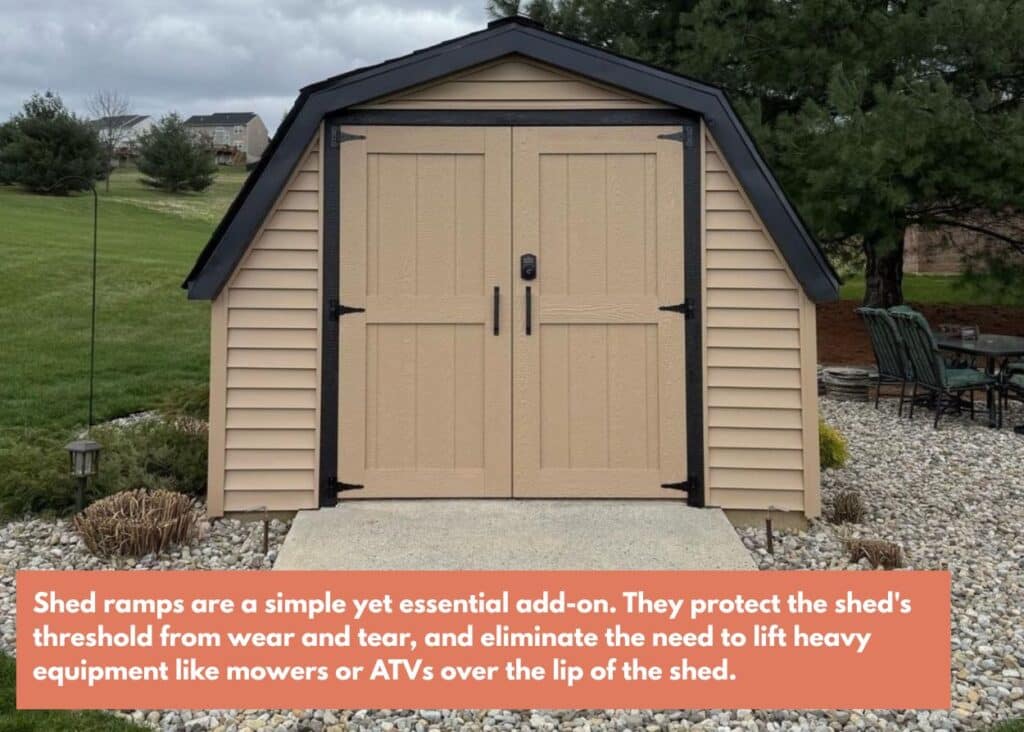
Shed ramps are a simple yet essential add-on. They protect the shed’s threshold from wear and tear, and eliminate the need to lift heavy equipment like mowers or ATVs over the lip of the shed. When choosing a ramp, consider its slope (aim for a 1:12 ratio), width, and traction to ensure a safe and easy transition. Ramps reduce strain, prevent damage to the shed floor, and improve day-to-day usability.
Side-by-Side: Pros & Cons of Common Shed Foundation Options
Treated Lumber Border + Crushed Stone Pad
Pros: clean, defined edges; contains stone; excellent drainage; stable when compacted; adjustable/repairable; cost-effective for most yards
Cons: requires ground-contact treated lumber; proper compaction in lifts is a must; edges can ravel without a border if not maintained
Concrete Blocks/Piers
Pros: quick, low material cost
Cons: uneven settling risk; fussy to level; weaker on wet/clay soils
Concrete Slab
Pros: strongest surface; great for heavy gear
Cons: highest cost; permanent; more permitting/planning
How to Choose the Best Option for Your Shed (Fast Checklist)
- Budget: Want durable + economical? → Crushed stone pad.
- Shed size: Small garden shed? Blocks can work; Medium/large? Go stone or slab.
- Soil & drainage: Clay or damp yard? Prioritize stone.
- Use & loads: Storing a zero-turn mower, an ATV, or a large collection of tools? Consider adding a ramp.
Code/floodplain: In mapped flood areas or higher wind zones, anchoring and elevation rules can apply to accessory structures—ask us.

Real Talk: What We Recommend Most
For most PA homeowners, the treated lumber border + crushed stone base is the sweet spot. It’s affordable, fast, and built to drain—which protects your shed and your investment.
When do we suggest a slab?
- You’re storing very heavy equipment daily.
- You want a permanent floor you can hose down.
- You’re already pouring adjacent concrete and want continuity.
Blocks/piers?
- Fine for small sheds on firm, well-drained ground—but we’ll walk you through the trade-offs.
And ramps?
- If you roll anything with wheels into your shed, a proper ramp is worth it. It saves your back—and your door threshold.
Ready for a Foundation That Works?
At Shed Repair LLC, our mission is simple: help homeowners extend the life of their sheds with sustainable, long-lasting solutions—done right the first time. We install draining, compacted, and level shed bases, as well as made-to-fit ramps with an eye for durability, safety, and the environment.

What that looks like on your job:
- Problem Solving. Site grades, water, and soil challenges—handled with clear plans and straight answers.
- Open Environment. We listen. We explain options. We keep communication easy and transparent from quote to cleanup.
- Innovative. Better methods. Smarter materials. Efficiency without cutting corners.
- Integrity. We do what we say. No shortcuts. No band-aids.
- Customer Satisfaction. Clean job sites, respectful crews, and results that last—so your doors swing true and your floor stays dry.
Want help choosing the best shed foundation for your yard? We’ll evaluate your site, understand your goals, and give you a clear plan—built around performance, budget, and access needs.
For more information on our products and services, head over to our shed foundation services page.